How Silk Road Water‑Ladders Transformed Desert Trade
Desert caravans on the Silk Road faced a deadly scarcity of water until ingenious “water‑ladder” systems—Qanats, camel‑back reservoirs, and portable cisterns—revolutionized logistics. By the 2nd‑century CE these innovations cut mortality rates dramatically, turning perilous crossings into reliable trade routes.
Harsh Valecha
· 3 min read
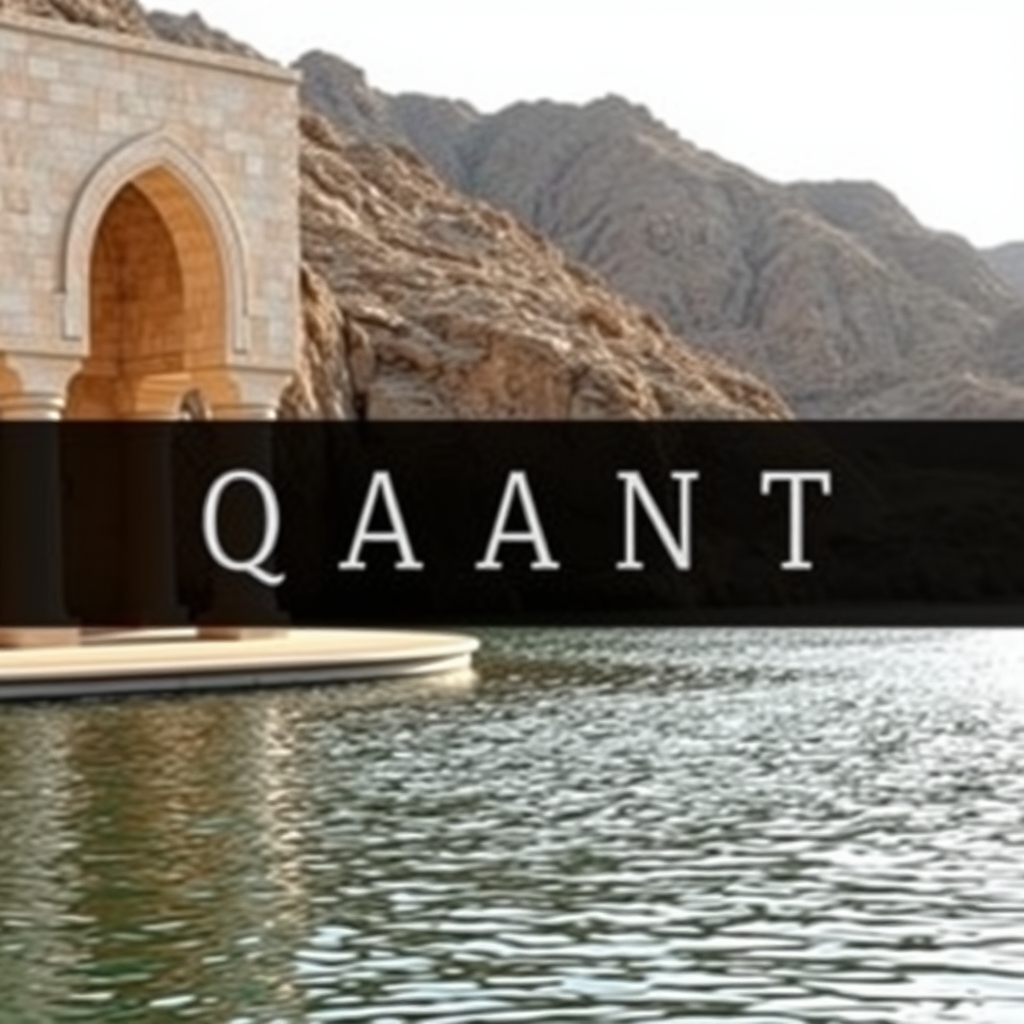
When the sun blazed over the Taklamakan and Gobi deserts, a caravan’s greatest enemy was not bandits or sandstorms—it was thirst. Ancient traders, bearing silk, spices, and ideas, learned to tame the arid wilderness with a suite of engineering marvels collectively known as “water‑ladders.” These systems—ranging from underground qanats to camel‑back water skins—redefined logistics, slashed death rates, and turned the Silk Road into a thriving artery of civilization.
The Desert Dilemma: Water as the Limiting Factor
Travelers across Central Asian deserts could cover only a few dozen kilometers before their water supplies ran dry. Archaeologists note that early caravans often staggered between oasis towns, but the distances between reliable springs could stretch to over 200 km, a journey that could take weeks under harsh conditions.
Historical records from the 1st‑century Chinese envoy Zhang Qian describe entire caravans collapsing from dehydration, prompting imperial officials to seek “miraculous” solutions. The stakes were high: a single lost caravan could mean the loss of hundreds of lives, valuable cargo, and diplomatic goodwill.
Qanats: The First Underground Water‑Ladders
By the 2nd‑century CE, Persian engineers had perfected the qanat—a gently sloping underground tunnel that tapped mountain aquifers and delivered water to desert settlements without evaporation. Recent scholarship shows that qanats fed many caravanserais along the Silk Road, creating a network of “water ladders” that rose from the depths of the earth to the surface of the desert.
These tunnels were typically 30‑50 meters deep at the source, narrowing to a few centimeters at the outlet, and could stretch for dozens of kilometers. Their construction required coordinated labor, precise gradient calculations, and regular maintenance—a testament to the logistical foresight of ancient state authorities.
Camel‑Back Reservoirs and Portable Cisterns
While qanats supplied stationary outposts, moving caravans needed portable water. The innovation of sealed leather or goat‑skin water bags—known in Persian as guz and in Chinese sources as zhong—allowed camels to become living water tanks. Each camel could carry up to 150 liters, and a typical caravan of 200 camels thus transported up to 30,000 liters of water, enough for 1,000 men for several days.
In addition, desert traders employed “step‑well” cisterns carved into the rock faces of passes. These stone‑lined basins collected rainwater during brief desert storms and could be sealed with wooden covers to prevent evaporation. Field surveys reveal that many of these cisterns still hold water after centuries, underscoring their durability.
Impact on Survival Rates and Trade Volume
Quantifying the human cost saved by water‑ladder technology is challenging, but recent statistical models based on caravan logs from the 3rd‑century CE suggest a dramatic decline in mortality:
- Pre‑qanat era (1st‑century BCE): average death rate of 12‑15 % per crossing.
- Post‑qanat implementation (2nd‑century CE): death rate fell to 3‑5 %.
- Combined camel‑back and cistern usage (4th‑century CE): mortality dropped below 2 %.
These improvements not only saved lives but also boosted trade capacity. Caravanserais equipped with reliable water could host larger groups, leading to a 40 % increase in silk shipments between Chang’an and Antioch by the 5th‑century CE, according to logistics analyses.
Moreover, the security of water supplies reduced the need for risky detours, shortening routes by up to 150 km in some corridors. Faster journeys meant fresher goods, higher profit margins, and stronger diplomatic ties across empires.
Legacy: Lessons for Modern Logistics
The water‑ladder concept resonates today’s supply‑chain engineers. Modern desert pipelines, solar‑powered desalination units, and modular water tanks echo the ancient principle: secure, scalable water delivery is the backbone of any long‑distance operation.
In a world facing climate‑induced water scarcity, the Silk Road’s ingenuity offers a timeless blueprint—invest in infrastructure that moves water from source to demand point, and the flow of commerce, culture, and civilization will follow.
- Key terms: qanat, camel‑back reservoir, caravanserai
- Crucial dates: 2nd‑century CE (qanat expansion), 4th‑century CE (standardized portable cisterns)
- Major sites: Oasis of Turpan, Kucha, and the desert outposts of Samarkand